



Items
Several studies offer
items to use for IS performance measurement.
A 3-round Delphi study was designed to identify important dimensions of
IS performance and to survey measures currently used to assess IS function
performance. The twenty executives that were surveyed agreed that the
primary role of IS is to provide service and support to the operating
units. The most important dimensions found were [1]:
- Impact on strategic
direction
- Integration of
IS planning with corporate planning processes
- Quality of information
output (accuracy, timeliness, and usefulness)
Some key measures that were found to be used in evaluating the performance of the IS function were:
- User complaints
- Cost/budget performance
- Operational efficiency/reliability
No single measure exists that covers all aspects of IS activities. What is needed is a set of measures appropriate for the activity of objectives being measured. Three aspect of IS performance [2]:
- Operational (uptime,
throughput, availability, mean time to failure)
- Transactional
(jobs processed, reruns)
- Budget/schedule
- These measures
should be jointly determined to measure both actual and perceived performance.
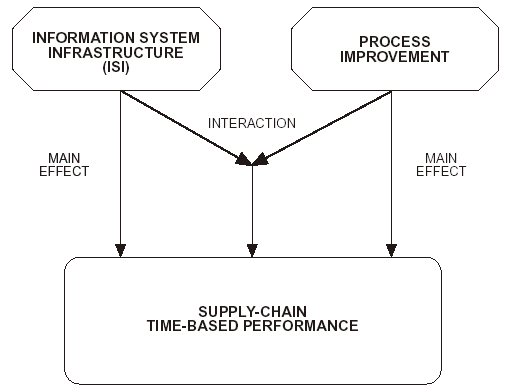
A model linking IS
infrastructure, process improvement, and their interaction to supply-chain
time-based performance as proposed by Jayaram [3]:
These IS infrastructures have key performance indicators that encompass
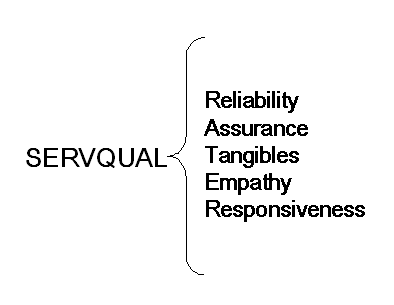
specific aspects of IS performance. For example, the SERVQUAL methodology
is based on the idea of assessing the gap between users' expectation of
a service and their perceptions of the service. The five RATER criteria
used in this analysis are [4]:
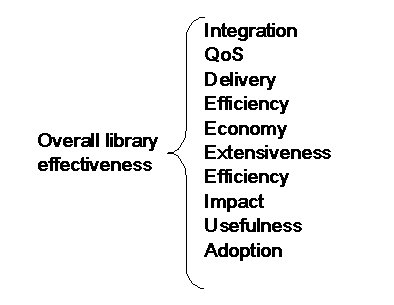
Other key performance indicators used to gauge overall library effectiveness
are [5]: